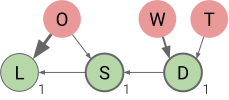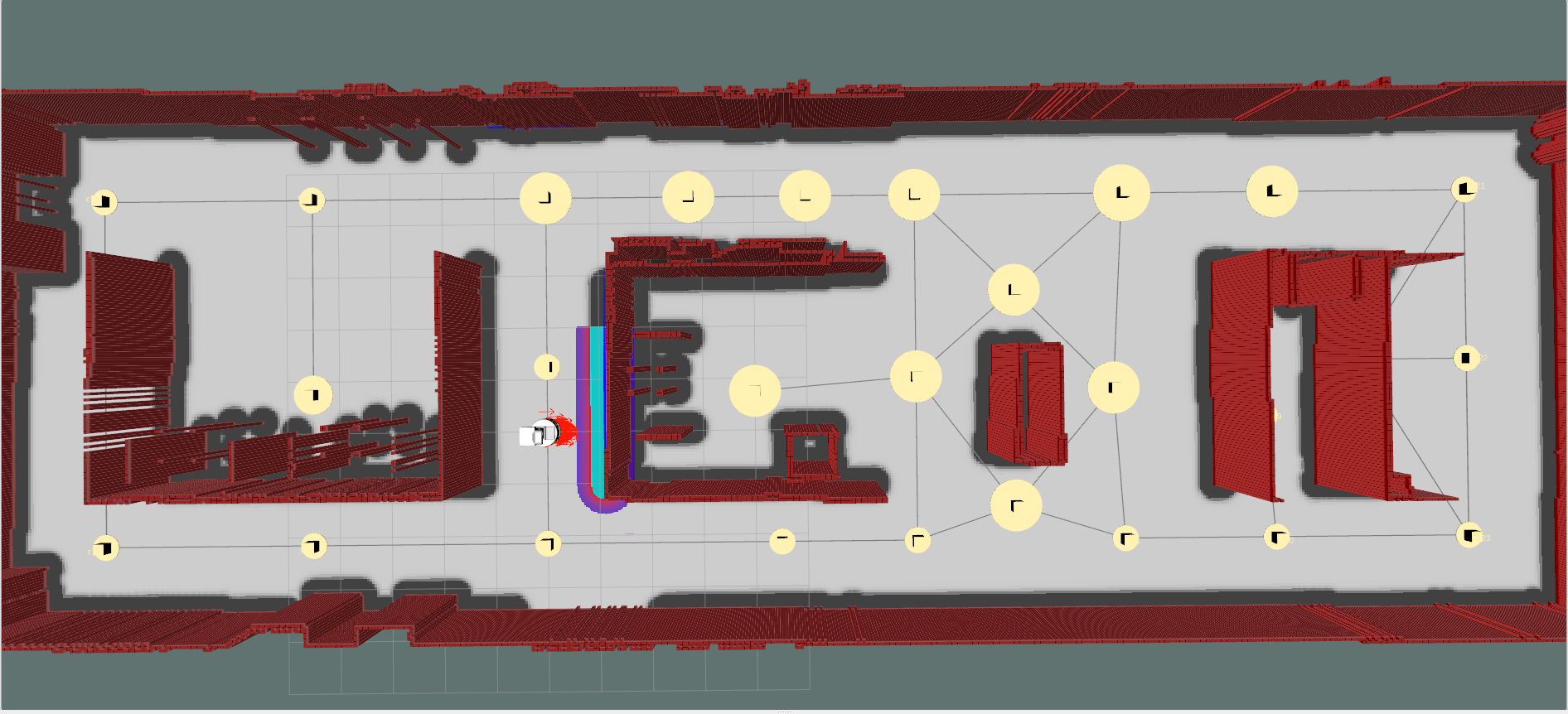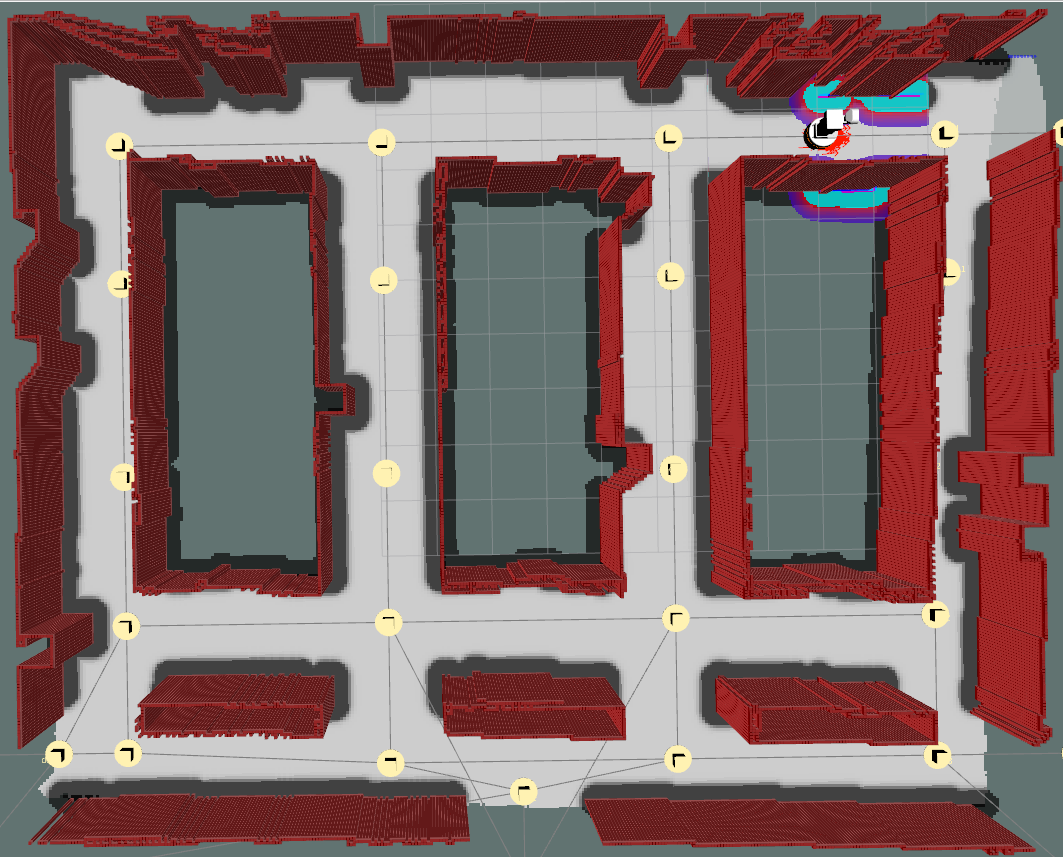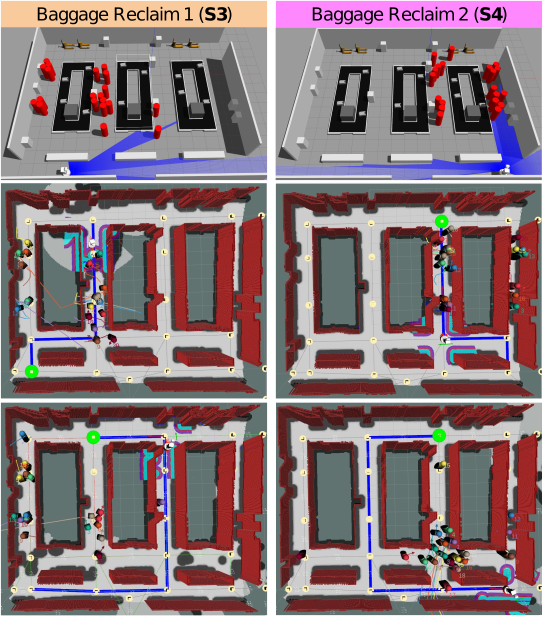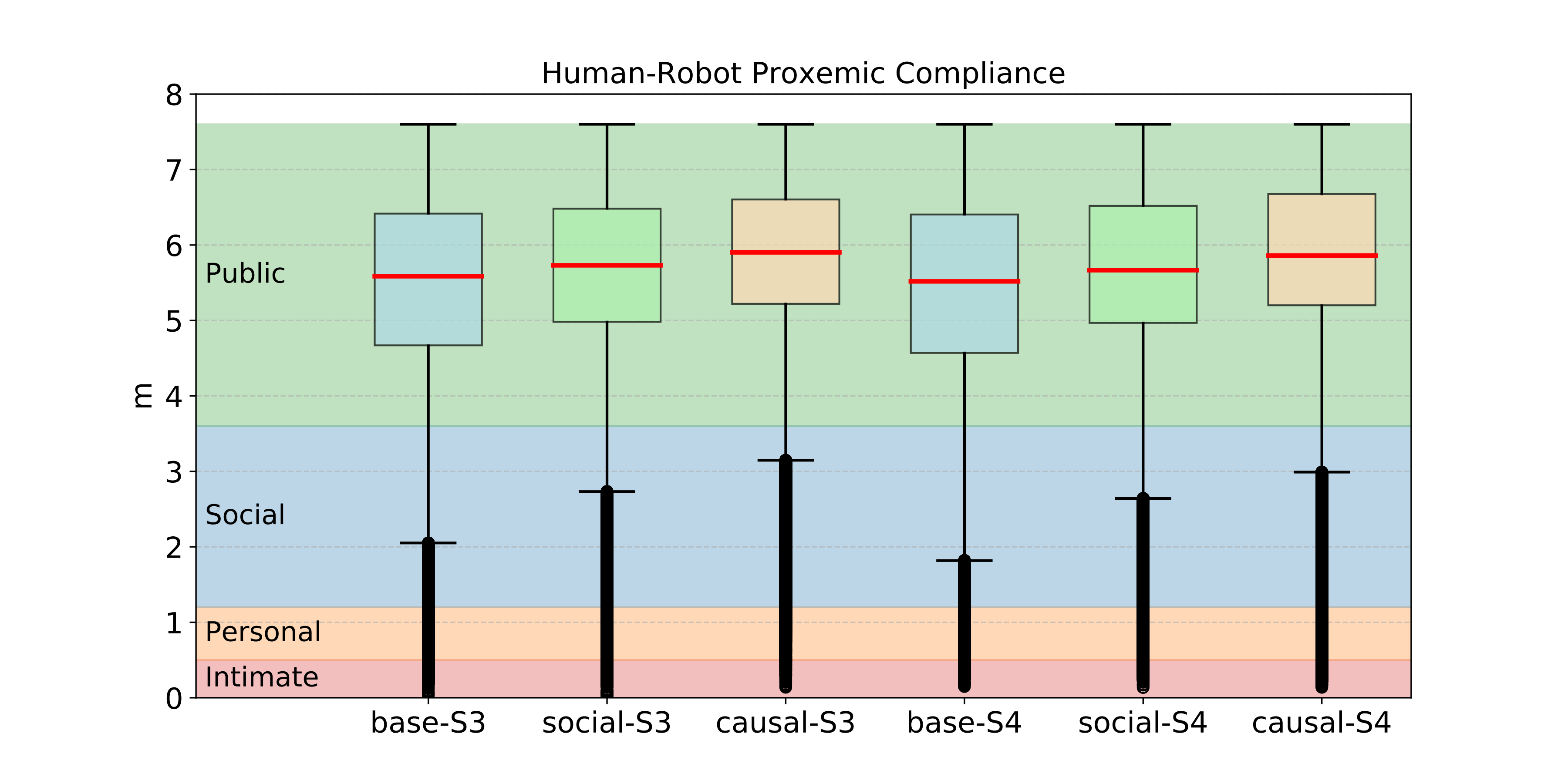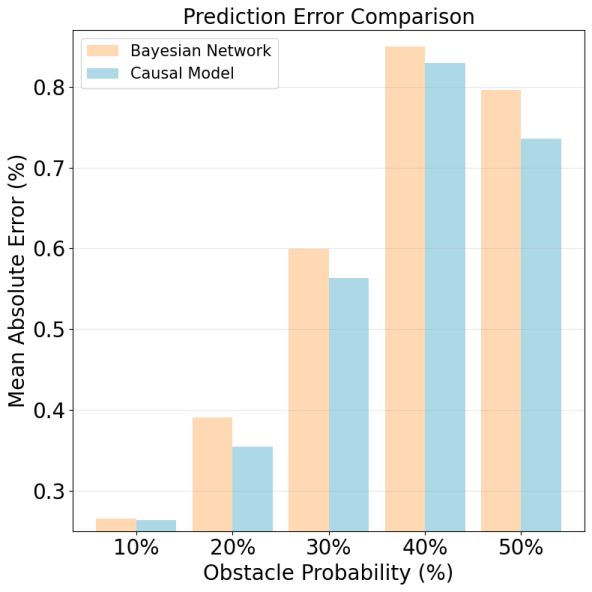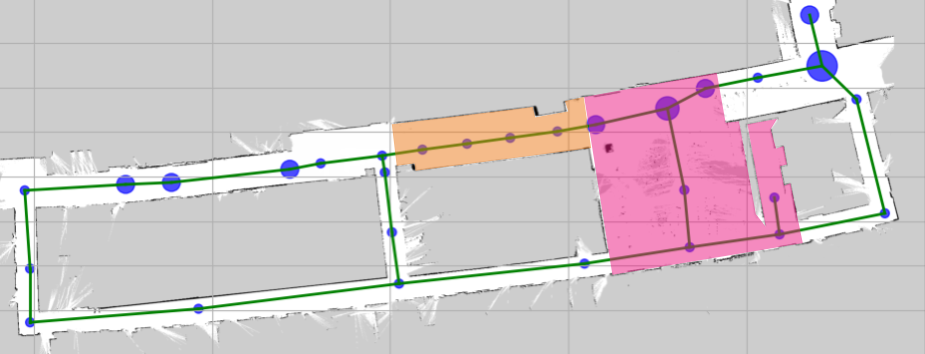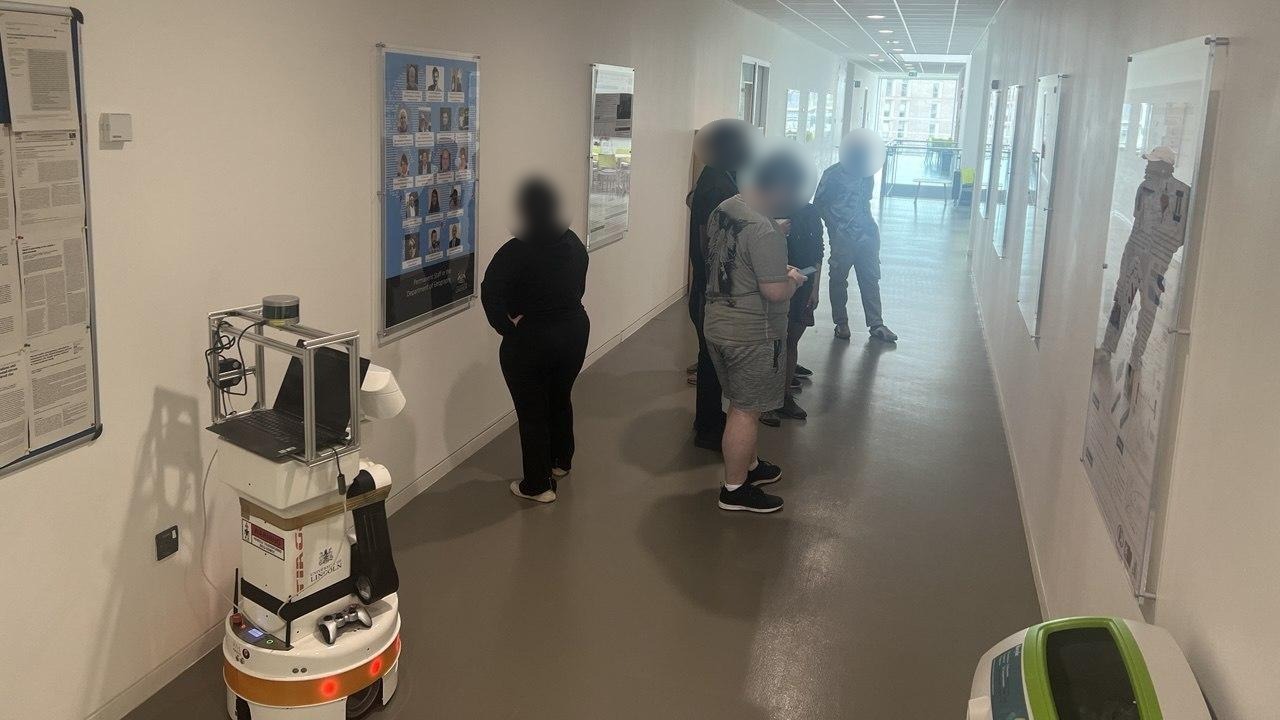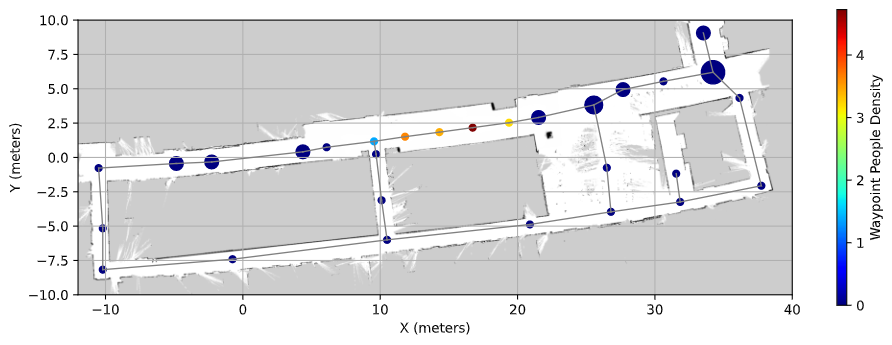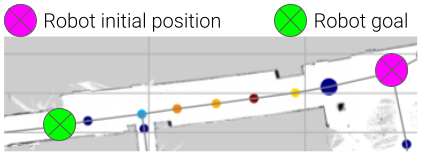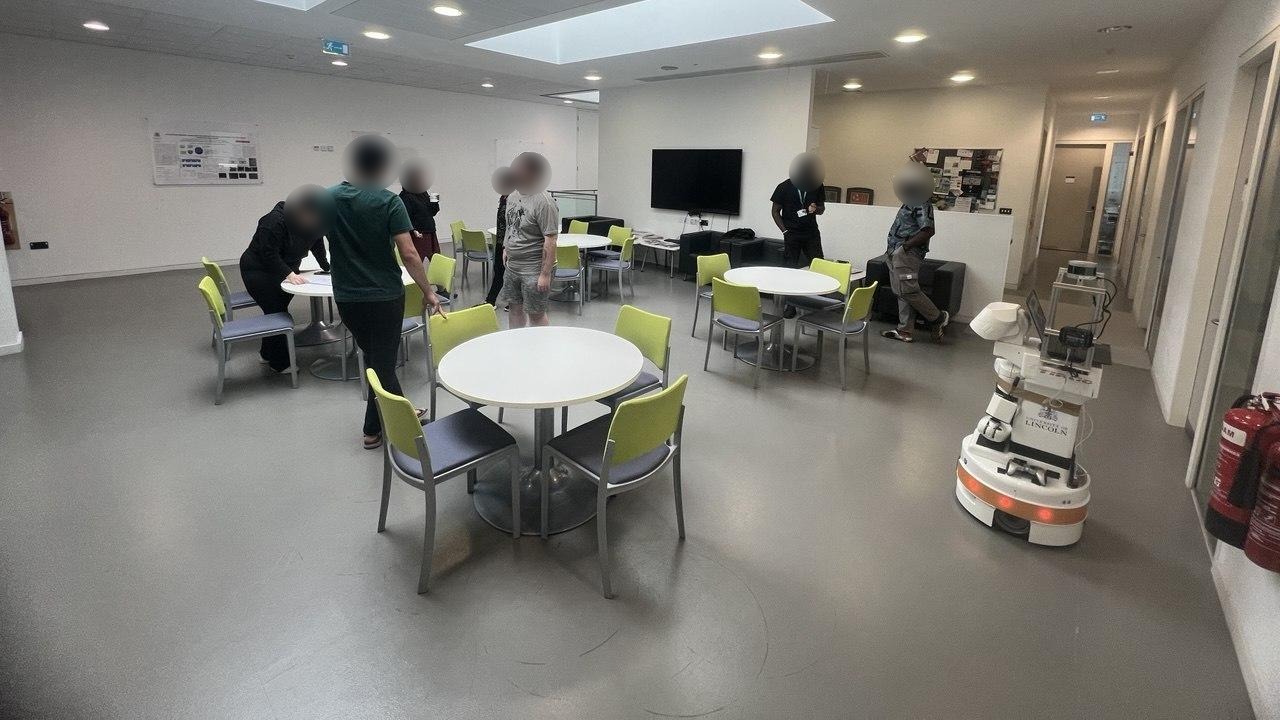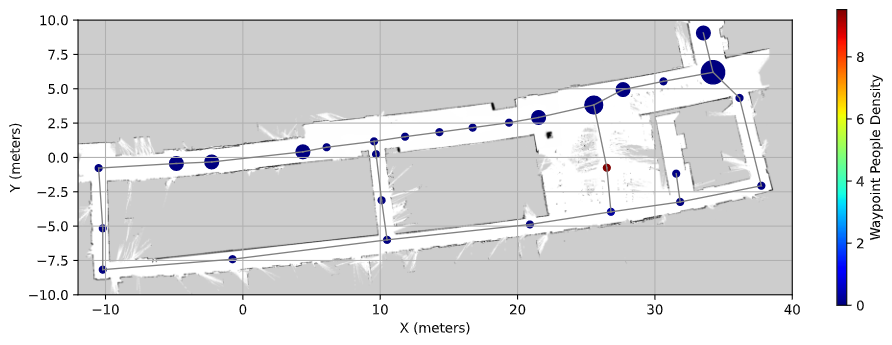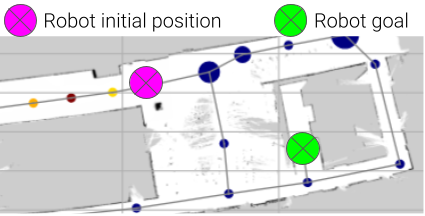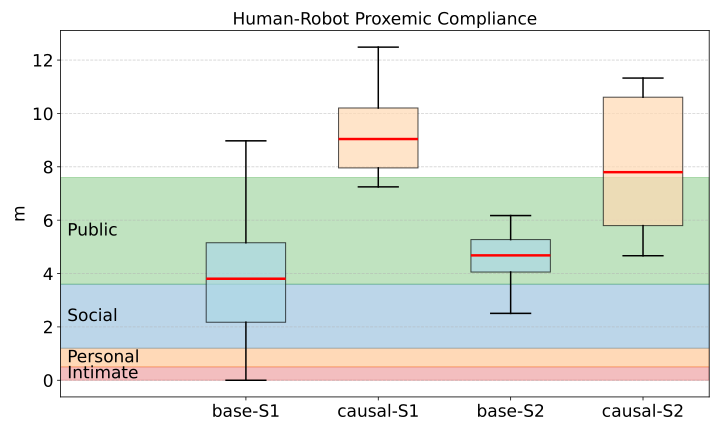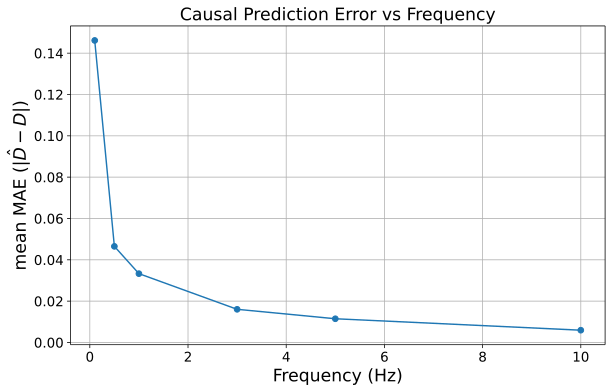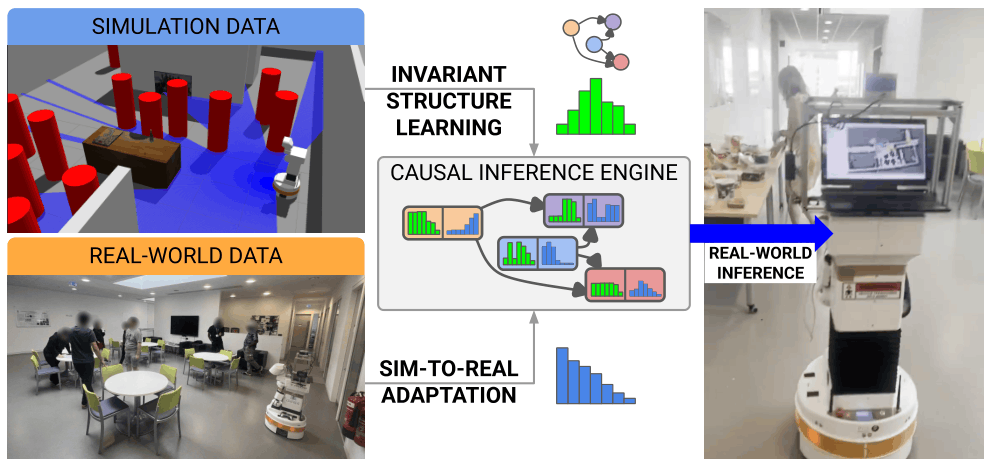

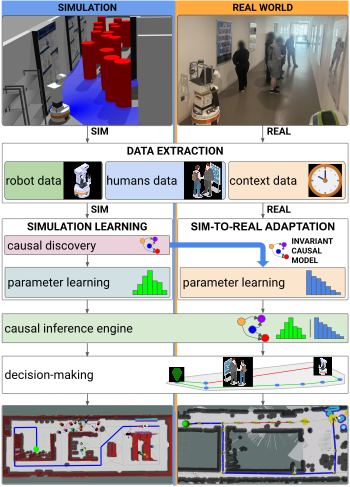
Objective: To evaluate the framework's navigation performance in simulation and reality, alongside its sim-to-real adaptability and real-time viability on a TIAGo robot.
Scenarios: Four social scenarios across two environments:
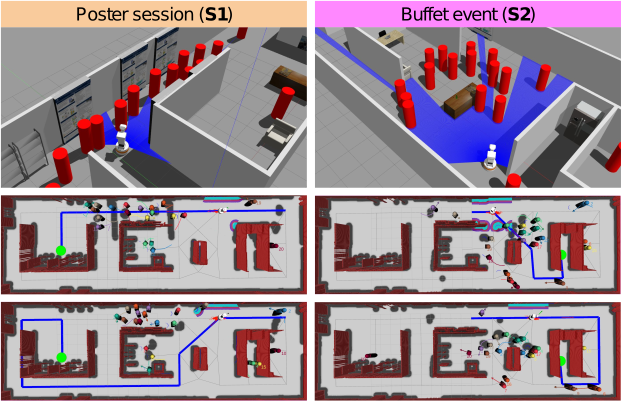
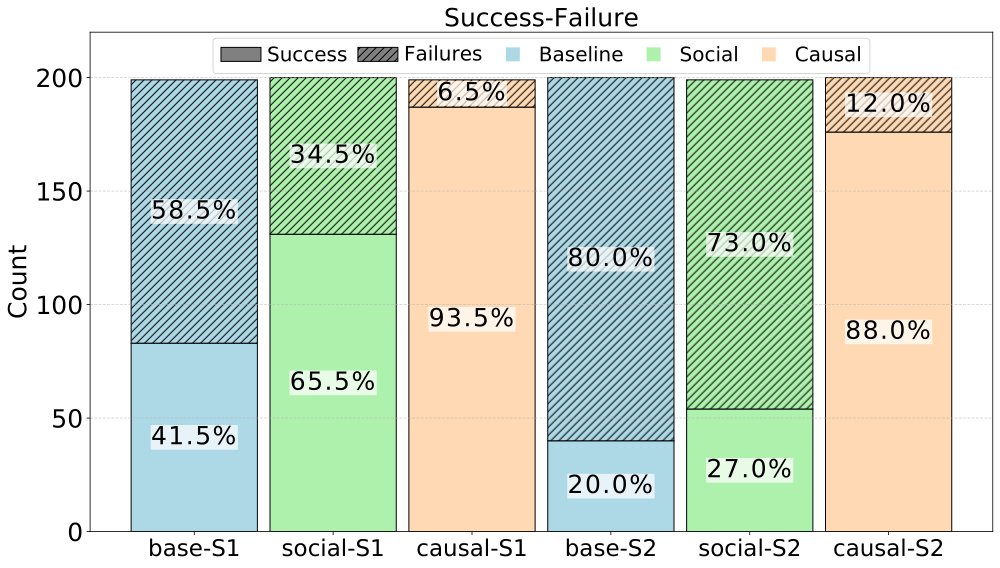
- Conference: Poster session (S1), with queues forming along a main corridor; buffet event (S2), where groups gather around food stations.
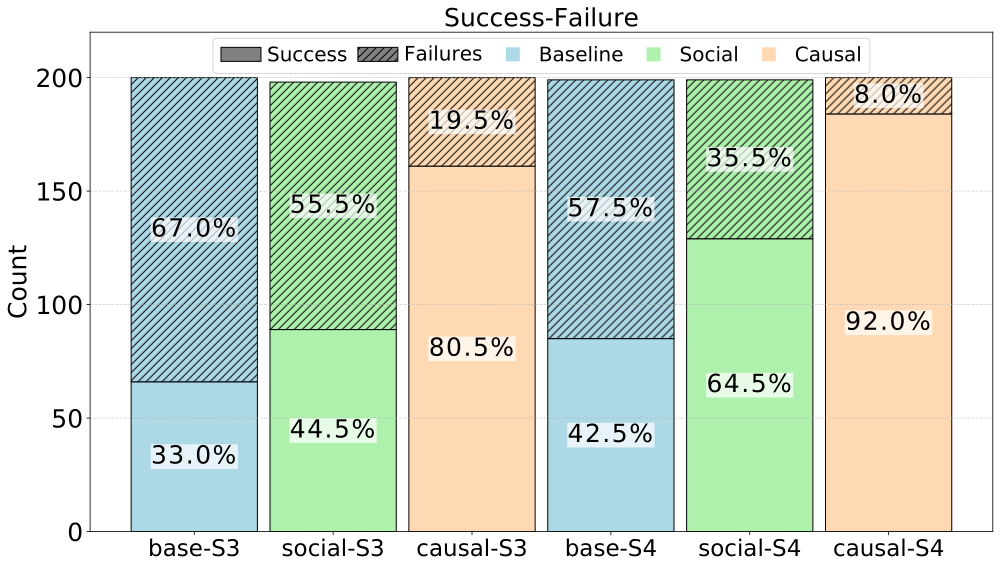
- Airport: Passenger crowds queuing at baggage reclaim belts upon flight arrivals (S3 and S4).
Across all scenarios, the robot must navigate through the context-dependent crowds to reach a designated goal.
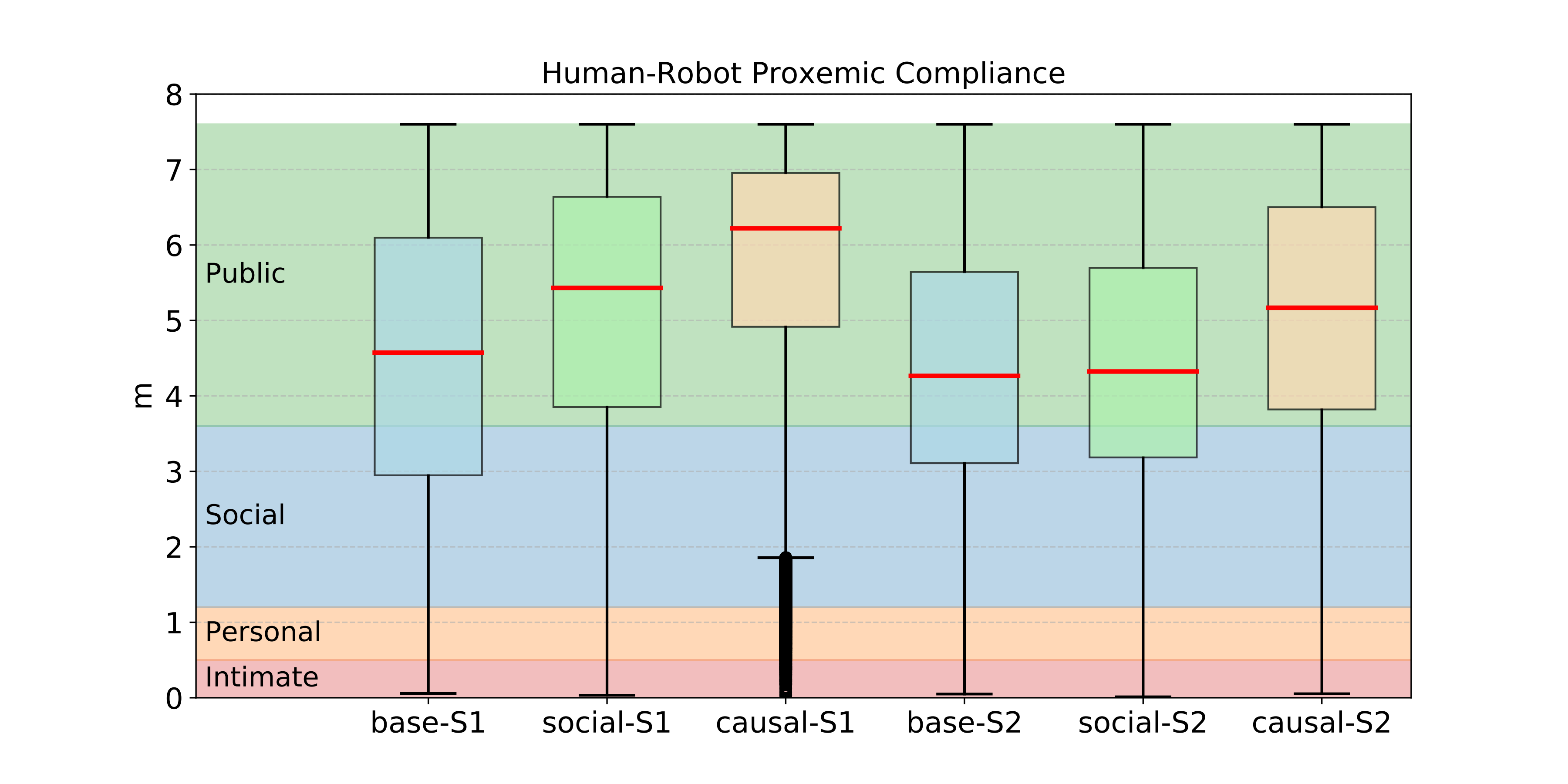
Baselines: Standard ROS~1 move_base with shortest-path A* (base), and a socially-aware variant integrating human proxemic costs into path planning (social), both using TIAGo's default TEB local planner (max speed 0.5 m/s).
Hypotheses:
- Effectiveness: The system yields safer paths and higher task success rates than the baselines across both simulated and physical environments.
- Adaptability & Generalization: The invariant causal structure transfers effectively to new topological layouts with unseen human activities (sim-to-sim) and physical environments (sim-to-real) through lightweight parameter adaptation, avoiding structural discovery from scratch.
- Efficiency: The system is efficient, utilising a light-data parameter update process for rapid real-world adaptation and performing causal inference fast enough for real-time onboard execution.
Metrics: Task Success (binary), Safety (human-robot proxemics compliance), Inference Time.